
Reviewed for scientific accuracy by Principle Nutrition Scientist David Gundermann, PhD | Last updated October 26, 2026
Getting enough iron is important, but how well your body absorbs it matters just as much. From the form of iron you consume to the foods and nutrients you pair it with, several factors can influence how much iron your body actually uses.
Let's explore the science behind iron absorption, including the roles of vitamin C and iron bisglycinate, and other factors that influence how the body absorbs this essential mineral.
The Quick Answer
- Vitamin C helps your body absorb iron. It supports the absorption of non-heme iron, the form found in plants and in most iron supplements.¹†
- Iron bisglycinate is a chelated form of iron. The iron is bound tightly to two glycine amino acids, and it is better absorbed than traditional non-chelated forms such as ferrous sulfate.†
- Timing and pairings matter. Calcium, coffee, and tea can get in the way of absorption. A little planning goes a long way.
- Test first, supplement second. Ask your healthcare practitioner about iron testing before starting an iron supplement, and supplement only if recommended.
Why Iron Absorption Is Not as Simple as "Eat More Iron"
Iron is central to the production of hemoglobin, a protein in red blood cells responsible for carrying oxygen from your lungs throughout your body, and myoglobin to carry oxygen within the tissues. Without adequate iron , you may notice fatigue, muscle weakness during exertion, pale skin, or trouble staying warm.
In a national survey analysis (NHANES 2007 to 2010), about 1 in 10 nonpregnant women ages 15 to 49 had iron deficiency.² Low iron can come from low dietary intake, poor absorption, blood loss over time, or increased demand during pregnancy.
Getting enough iron is often easier said than done, especially on a vegan or vegetarian diet. And here is the part many people miss: how much iron is in your food or supplement is only half the question. How much your body can absorb is the other half.
Heme vs. Non-Heme Iron: Two Doors Into the Body
Iron comes in two forms.
|
Type |
Where It Is Found |
How It Is Absorbed |
|
Heme iron |
Meat, poultry, and seafood |
Absorbed more readily |
|
Non-heme iron |
Plant foods, fortified foods, and most iron supplements |
Absorption varies more, and depends on what else is on your plate |
NIH reports that iron bioavailability is approximately 14% to 18% from mixed diets that include meat, seafood, and vitamin C, and 5% to 12% from vegetarian diets.³
Because non-heme iron is more sensitive to what you eat and drink alongside it, the pairing strategies below matter most for plant-based eaters and for anyone taking an iron supplement.
How Vitamin C Supports Iron Absorption
Vitamin C is one of the best-studied helpers for non-heme iron. In the gut, it helps keep iron in a form that is easier for your body to absorb.†
A systematic review and meta-analysis of 26 studies concluded that ascorbic acid enhances the absorption of nonheme iron.⁴ NIH also notes that your body absorbs iron from plant sources better when you eat it with foods that contain vitamin C, such as citrus fruits, strawberries, sweet peppers, tomatoes, and broccoli.⁵
You can pair them at the table:
- Add bell peppers or tomatoes to a lentil or bean dish
- Squeeze lemon over leafy greens
- Enjoy citrus or berries with iron-fortified oatmeal
- Pair spinach with strawberries or orange segments
And we pair them in the bottle. Blood Builder® Iron includes 15mg of vitamin C to support iron absorption, so the pairing is built in. †
What Is Iron Bisglycinate?
Iron bisglycinate is iron bound to two molecules of glycine, an amino acid. This chelated structure is why it is often described as "high absorption" and "gentle."
- Better absorbed. Iron bisglycinate can be better absorbed than non-chelated forms of iron, such as ferrous sulfate.† In one study of iron-sufficient adults eating whole-maize porridge, absorption from ferrous bisglycinate was about 4 times higher than from ferrous sulfate.⁶
- Gentle on the stomach. Many people stop taking iron because of nausea or constipation. In an 8-week clinical study of 23 premenopausal women with nonanemic iron deficiency, Blood Builder® Iron was shown to increase iron levels, and no adverse events were reported.⁷††
- Made with food in mind. We start with an amino-acid chelate, add live nutritional yeast, and use aerobic fermentation to create a fermented mineral delivered in a food nutrient complex.
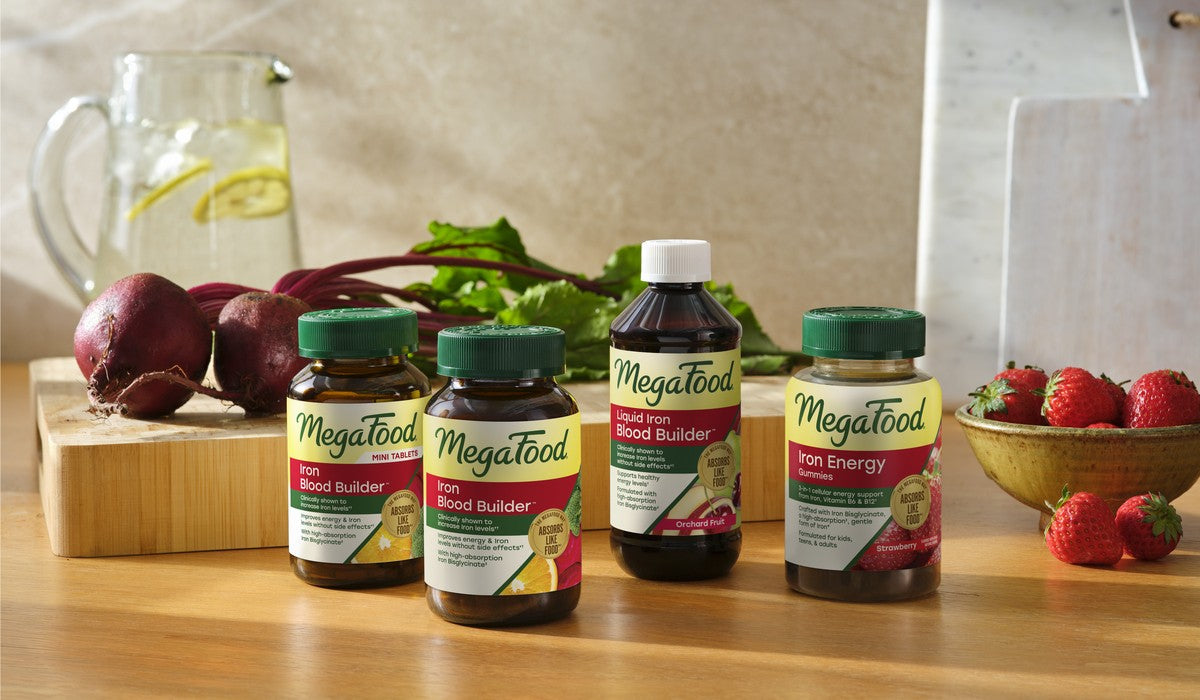
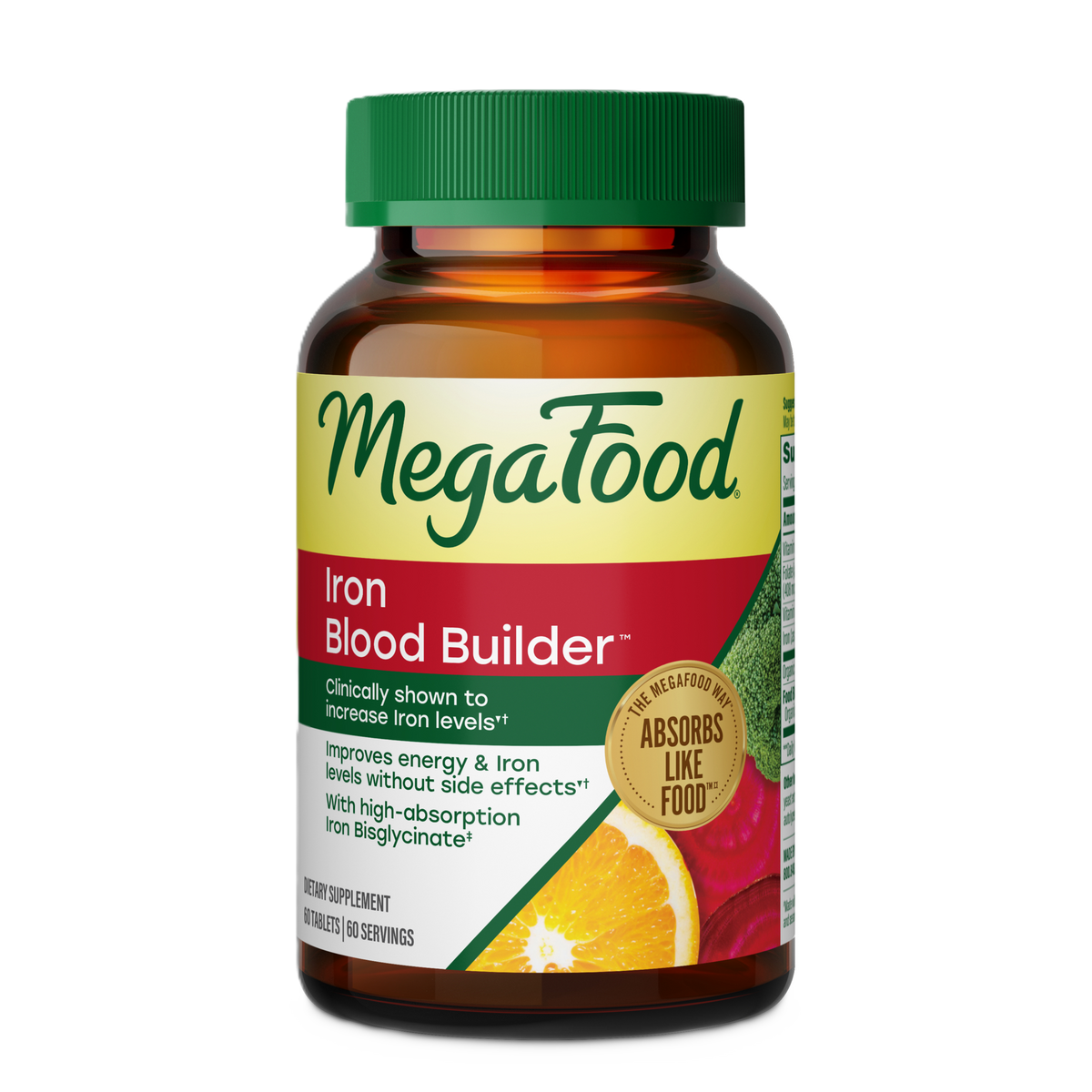
Blood Builder® Iron delivers 26mg of iron as iron bisglycinate, with 15mg of vitamin C, folic acid, and B12 to support healthy red blood cell production, plus real food like beets and oranges.†
What Can Get in the Way
A few everyday habits can reduce how much iron your body takes in. You do not need to give any of them up. Just space them out.
- Calcium. Calcium supplements and calcium-rich foods can interfere with iron absorption. Take them at a different time of day.⁵
- Coffee and tea. Polyphenols in coffee and tea can reduce iron absorption. Try having them at a different time than your iron. The Office on Women's Health advises avoiding coffee or tea with meals.⁸
- Other minerals taken at the same time. High doses of certain minerals, such as zinc, may interfere with iron absorption.
A Simple Daily Routine
Think of this as a flexible starting point, not a rulebook. Your healthcare practitioner can tailor it to you.
- Confirm your need. Ask for iron tests, such as ferritin, and talk through the results.
- Choose a gentle form. Look for iron bisglycinate paired with vitamin C, and choose an iron dose that reflects your lab results and your healthcare practitioner's advice.
- Take it your way. Blood Builder® Iron is gentle enough to take any time of day, even on an empty stomach. Adults take one tablet daily with a beverage. Do not exceed the recommended intake.
- Plan your pairings. Add a vitamin C-rich food to your meal, and keep calcium, coffee, and tea a little apart from your iron.
- Recheck. Follow-up with iron testing as recommended by your healthcare practitioner.
Who May Benefit From Extra Attention to Iron
People at higher risk of low iron include menstruating women, teenage girls, pregnant women, vegans and vegetarians, athletes, and recent blood donors. If that sounds like you, a conversation with your healthcare practitioner is a good first step.
Iron supplementation is not necessary for everyone, and routine supplementation is not typically recommended for most adult men unless a healthcare practitioner identifies a need. Too much iron can cause harm, so confirm your dose with your doctor.
Frequently Asked Questions
Does vitamin C really help iron absorb?
Yes. Vitamin C supports the absorption of non-heme iron, which is the type found in plant foods and in most iron supplements.¹† Pairing the two, in a meal or in a formula, is a simple way to support absorption.
Do I need to take my iron supplement with orange juice?
Not necessarily. Blood Builder® Iron already includes 15mg of vitamin C by design. If you like to add a vitamin C-rich food or drink, that is a nice bonus, not a requirement.
Is iron bisglycinate better absorbed than ferrous sulfate?
Iron bisglycinate can be better absorbed than non-chelated forms of iron, such as ferrous sulfate.†
Can I take iron on an empty stomach?
Blood Builder® Iron is gentle enough to take any time of day, even on an empty stomach. If you have any stomach sensitivity, you can take it with food. Follow the directions on the label.
Will iron bisglycinate cause constipation or nausea?
Everyone is different, and individual responses vary. In an 8-week pilot clinical study of 23 premenopausal women, Blood Builder® Iron increased iron levels and no adverse events were reported.⁷††
How long does it take to see results?
It depends on your starting iron status, your diet, and how consistently you take it. In the 8-week study, one serving per day was shown to improve markers of iron status.⁷†† Your healthcare practitioner can tell you when to recheck your iron levels.
Can I take iron with a multivitamin?
Many people do. Check the iron content of your multi so you do not exceed your recommended intake, and ask your practitioner to review your full routine. Some of our multis, such as Men's 40+ Advanced Multivitamin, are made without iron.
Is iron safe for vegans and vegetarians?
Blood Builder® Iron is vegan, non-GMO, gluten-free, Kosher, third-party tested for over 150 chemical substances, and made without the top 9 allergens.* Plant-based diets can make iron harder to come by, so many vegans and vegetarians choose to check their iron levels with their healthcare practitioners.
The Takeaway
Iron absorption is not about doing everything perfectly. It is about a few small, repeatable habits: know your numbers, choose a form that is gentle and well absorbed, pair it with vitamin C, and give calcium and coffee some space.
Your energy is worth the check-in. Start with your lab tests, talk with your healthcare practitioner, and build from there.
Shop Now: Blood Builder® Iron Supplement
†These statements have not been evaluated by the Food and Drug Administration. This product is not intended to diagnose, treat, cure, or prevent any disease.
††Based on an 8-week clinical study (n=23, no control group) in premenopausal women with iron deficiency.⁷
Made without 9 Allergens: Milk, eggs, peanuts, tree nuts, soy, wheat, fish, shellfish, and sesame.
This content is for educational purposes and is not medical advice. Talk with your healthcare practitioner before taking an iron supplement, especially if you are pregnant, take medication, or have a medical condition.
References
- NIH ODS. Vitamin C: Fact Sheet for Consumers
- Iron status of toddlers, nonpregnant females, and pregnant females in the United States (NHANES)
- NIH ODS. Iron: Fact Sheet for Health Professionals
- Heffernan A, et al. The regulation of dietary iron bioavailability by vitamin C: a systematic review and meta-analysis. Proc Nutr Soc. 2017
- NIH ODS. Iron: Fact Sheet for Consumers
- Bovell-Benjamin AC, et al. Iron absorption from ferrous bisglycinate and ferric trisglycinate in whole maize is regulated by iron status. Am J Clin Nutr. 2000
- D'Adamo CR, et al. A food-derived dietary supplement containing a low dose of iron improved markers of iron status among nonanemic iron-deficient women. J Am Coll Nutr. 2018;37(4):342-349
- HHS Office on Women's Health. Iron-deficiency anemia fact sheet



Leave a comment
This site is protected by hCaptcha and the hCaptcha Privacy Policy and Terms of Service apply.