
How nutrient-dense foods can support your body through each stage of the menstrual cycle.
The menstrual cycle is a natural rhythm that reflects changes happening throughout the body each month. Hormones rise and fall across the cycle, influencing energy levels, appetite, mood, sleep, and digestion.
While everyone’s experience is different, many people find that paying attention to these shifts—and adjusting nutrition accordingly—can help them feel more supported throughout the month. Eating a variety of whole, nutrient-dense foods can help support overall wellness at every stage of the cycle. Understanding what’s happening during each phase may also help guide food choices that feel nourishing and satisfying.
Understanding the Four Phases of the Menstrual Cycle
The menstrual cycle is typically divided into four phases:
- Menstrual phase
- Follicular phase
- Ovulatory phase
- Luteal phase
Each phase brings different hormonal patterns that can influence how the body feels and what it may need nutritionally.
Menstrual Phase: Rest and Replenish
This phase begins on the first day of bleeding. The three main menstrual cycle hormones are at their lowest levels, and many people feel more tired or inward-focused during this time. Supporting foods during this phase often focus on replenishing nutrients and providing gentle nourishment.
Foods to consider:
- Iron-rich foods such as lentils, beans, leafy greens, and grass-fed meats
- Mineral-rich broths or soups
- Magnesium-rich foods like pumpkin seeds, dark chocolate, and leafy greens
- Warming foods such as cooked grains, roasted vegetables, and stews
Staying hydrated and prioritizing rest can also support overall comfort during this stage.
Follicular Phase: Energy Begins to Rise
After menstruation, the body begins preparing for ovulation. Estrogen gradually increases, and many people notice rising energy and motivation. This can be a good time to focus on fresh, nutrient-dense foods that support overall metabolic and digestive health.
Foods to consider:
- Leafy greens and cruciferous vegetables
- Fermented foods such as yogurt, kefir, or sauerkraut
- High-quality proteins like eggs, beans, tofu, or fish
- Fiber-rich foods like oats, berries, and whole grains
- Fresh, raw vegetables (salads, etc.)
Many people find that lighter, vibrant meals feel especially appealing during this phase.
Ovulatory Phase: Nourishing and Sustaining
Ovulation is typically the shortest phase of the cycle. Estrogen peaks, and some people feel their most energized and socially engaged during this time. Balanced meals that combine protein, fiber, and healthy fats can help support stable energy levels.
Foods to consider:
- Colorful vegetables and fruits rich in antioxidants
- Lean proteins such as fish, chicken, tofu, or legumes
- Healthy fats like avocado, olive oil, and nuts
- Mineral-rich seeds such as sesame or sunflower
Hydration and balanced meals can help maintain steady energy during this phase.
Luteal Phase: Grounding and Supporting
During the luteal phase, progesterone rises. Some people notice increased appetite, cravings, or shifts in mood and energy as the body prepares either for pregnancy or the next menstrual cycle. This phase can be a time to prioritize satisfying meals that support steady blood sugar and provide key nutrients.
Foods to consider:
- Complex carbohydrates like sweet potatoes, quinoa, and brown rice
- Magnesium-rich foods such as pumpkin seeds, dark chocolate, and leafy greens
- B vitamin–rich foods like beans, whole grains, and eggs
- Healthy fats from nuts, seeds, and avocado
Warm, grounding meals may feel especially nourishing during this phase.
Should You Consider Seed Cycling?
Seed cycling is a nutrition practice that involves rotating certain seeds during different phases of the menstrual cycle. Typically, flax and pumpkin seeds are eaten during the first half of the cycle, while sesame and sunflower seeds are consumed during the second half. These seeds are naturally rich in fiber, healthy fats, and minerals, making them a nutrient-dense addition to snacks or meals.
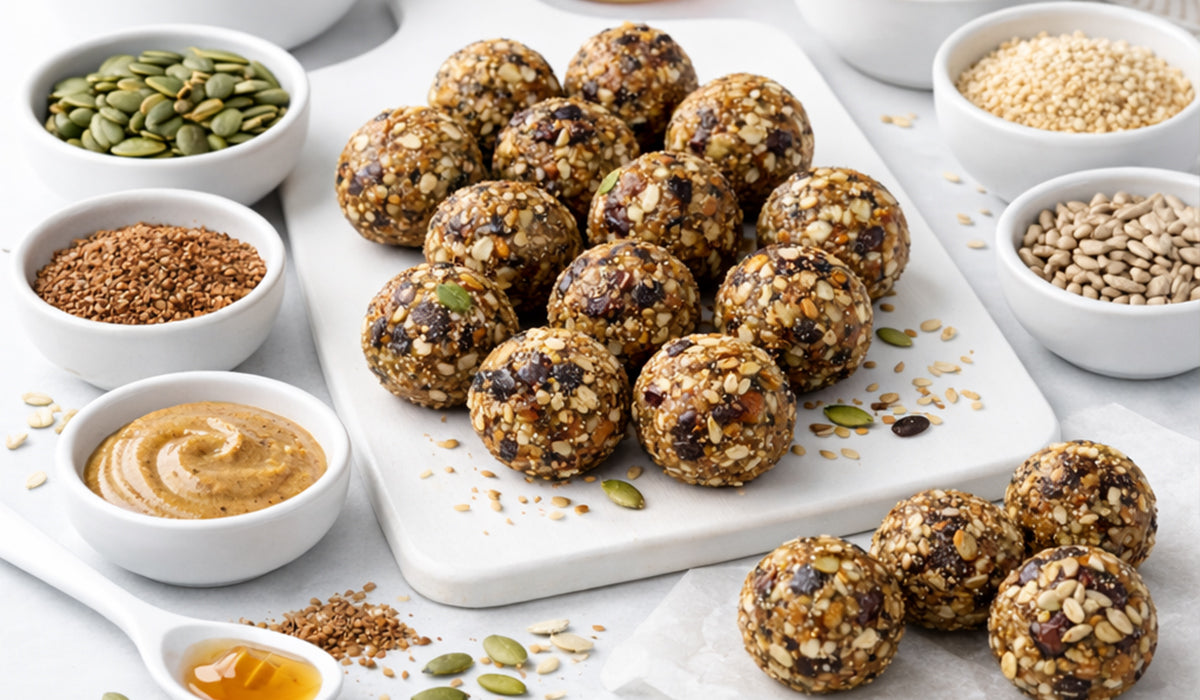
Simple seed cycling bite idea:*
- Blend dates, oats, pumpkin seeds, and flax seeds during the first half of the cycle.
- During the second half, swap in sesame and sunflower seeds.
- Roll into small bites and store in the refrigerator for a convenient snack.
While research on seed cycling is still emerging, incorporating a variety of seeds into the diet can be a simple way to add fiber and nutrients.
Listening to Your Body
No two cycles are exactly alike. Energy levels, cravings, and symptoms can shift from month to month, and each person’s experience is unique. Rather than following strict rules, many people find it helpful to notice patterns in how they feel and adjust their meals and routines accordingly.
Focusing on a balanced diet rich in whole foods, minerals, healthy fats, and fiber can help support overall wellness throughout the cycle. Ultimately, supporting your body through each phase isn’t about getting it perfect—it’s about tuning in, staying curious, and choosing foods that feel nourishing along the way.
OPTIONAL RECIPE CARD:
Seed Cycling Energy Bites*
A simple, nutrient-dense snack made with seeds, oats, and dates. These no-bake bites are easy to prepare and can be adapted depending on where you are in your cycle.
Prep time: 10 minutes
Chill time: 30 minutes
Makes: about 12 bites
Ingredients
Base mixture
- 1 cup rolled oats
- ½ cup Medjool dates, pitted
- 2 tablespoons nut or seed butter (such as almond, peanut, or tahini)
- 1 tablespoon maple syrup or honey
- 1 teaspoon vanilla extract
- 1–2 tablespoons water, as needed for blending
Cycle seeds
First half of the cycle (menstrual + follicular phases)
- 2 tablespoons ground flax seeds
- 2 tablespoons pumpkin seeds
Second half of the cycle (ovulatory + luteal phases)
- 2 tablespoons sesame seeds
- 2 tablespoons sunflower seeds
Instructions
- Add oats, dates, nut butter, maple syrup, and vanilla to a food processor.
- Pulse until the mixture begins to come together.
- Add the seeds for the phase of your cycle. Pulse again until evenly combined.
- If the mixture feels dry, add water one tablespoon at a time until it sticks together.
- Roll the mixture into small bite-sized balls.
- Refrigerate for about 30 minutes to firm up.
Store in an airtight container in the refrigerator for up to one week.
Ways to customize
- Add a tablespoon of cacao powder for a chocolate version
- Mix in shredded coconut for extra texture
- Add cinnamon or cardamom for warm flavor
- Stir in mini dark chocolate chips if you want something sweeter
Why seeds?
Seeds like flax, pumpkin, sesame, and sunflower are naturally rich in fiber, minerals, and healthy fats. Including a variety of seeds in snacks and meals can be an easy way to add nutrient diversity to your diet.
* Allergen Notice
This recipe contains sesame, a common allergen. If you have a sesame allergy or sensitivity, please avoid this recipe or substitute with a safe alternative recommended by your healthcare provider.




Leave a comment
This site is protected by hCaptcha and the hCaptcha Privacy Policy and Terms of Service apply.