
Understanding where your iron comes from, how your body absorbs it, and how to make every bite count
Reviewed by Nutrition Scientist David Gundermann, PhD | Last reviewed October 2026
Low on energy? Trouble concentrating? Fatigue, weakness, dizziness, difficulty concentrating, and hair loss may be associated with low iron. The type of iron you eat changes how much your body can actually use.
The good news? You don't need a nutrition degree to get this right. Here's a simple breakdown of heme and non-heme iron, the foods that deliver each, and a few easy ways to help your body absorb more.
Heme vs Non-Heme Iron at a Glance
|
|
Heme Iron |
Non-Heme Iron |
|
Where It Comes From |
Meat, poultry, fish, shellfish, organ meats |
Beans, lentils, tofu, seeds, leafy greens, fortified cereals, eggs, dairy, and most iron supplements |
|
Typical Absorption (Monsen 1988) |
About 15 to 35% |
About 2 to 20% |
|
Affected by Other Foods |
Very little (calcium has some effect) |
A lot: vitamin C helps; phytates, tea, coffee, and calcium can limit it |
|
Regulated by Your Iron Stores |
Partly |
Strongly |
|
Suits Vegans and Vegetarians |
No |
Yes |
Overall iron bioavailability is about 14 to 18% from mixed diets that include meat, seafood, and vitamin C, and about 5 to 12% from vegetarian diets (NIH Office of Dietary Supplements).
What Is Heme Iron?
Heme iron is iron bound inside hemoglobin or myoglobin, the proteins that carry oxygen in animal tissue. Your body takes it up as an intact complex, which is why other foods on your plate affect it less.
In simple terms: heme iron is the more straightforward route when it comes to absorption.
Food sources: oysters and clams, beef and beef liver, turkey, tuna, shrimp, sardines, chicken thigh.
What Is Non-Heme Iron?
Non-heme iron is iron in its ionic form. It lives in plants, eggs, dairy, and fortified foods, and it's the form in most iron supplements. Your body has a harder time absorbing it than heme iron, so the meal around it matters.
In simple terms: non-heme iron is more sensitive to what you eat alongside it, which also means you have more control over how well it works.
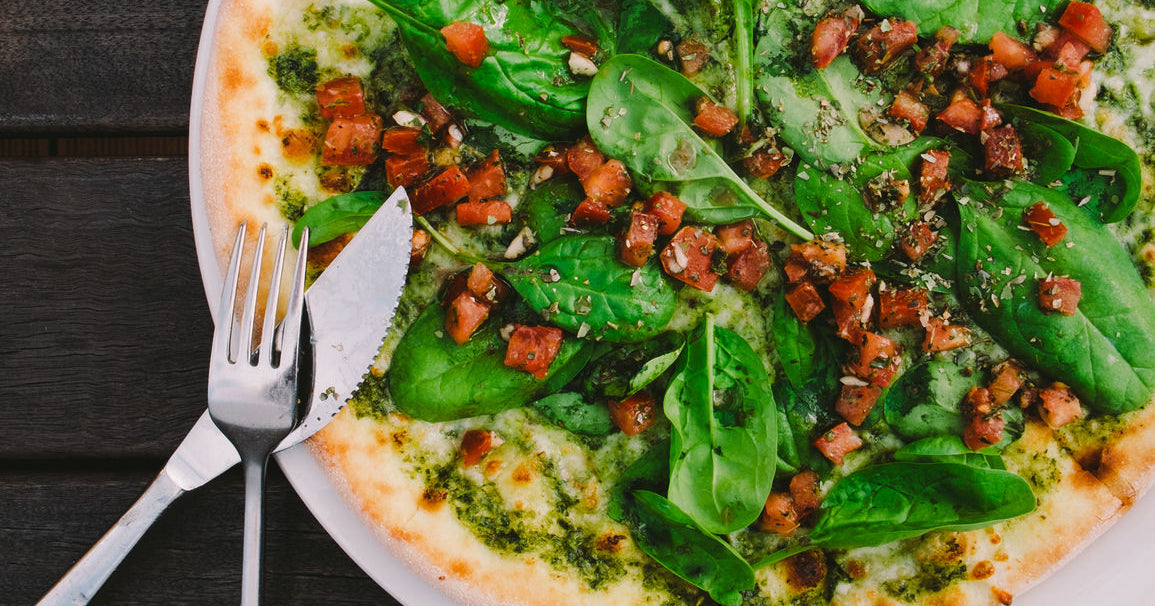
Food sources: lentils, beans, tofu, cashews, pumpkin seeds, spinach and kale, iron-fortified cereals.
Iron Food Sources at a Glance
|
Food |
Type |
Iron per Serving |
Serving Size |
|
Oysters, cooked |
Heme |
8 mg |
3 oz |
|
Beef Liver, pan fried |
Heme |
5 mg |
3 oz |
|
Beef, braised |
Heme |
2 mg |
3 oz |
|
Turkey, roasted |
Heme |
1 mg |
3 oz |
|
Tuna, canned light |
Heme |
1 mg |
3 oz |
|
Egg, hard boiled |
Non-Heme |
1 mg |
1 large |
|
Lentils, boiled |
Non-Heme |
3 mg |
½ cup |
|
White Beans, canned |
Non-Heme |
8 mg |
1 cup |
|
Tofu, firm |
Non-Heme |
3 mg |
½ cup |
|
Cashews, oil roasted |
Non-Heme |
2 mg |
1 oz (18 nuts) |
|
Spinach, boiled |
Non-Heme |
3 mg |
½ cup |
|
Fortified Breakfast Cereal (100% DV) |
Non-Heme |
18 mg |
1 serving |
Source: NIH Office of Dietary Supplements, Iron Fact Sheet for Health Professionals, Table 2 (data from USDA FoodData Central). Meat, seafood, and poultry contain both heme and non-heme iron. Spinach is a good source of iron, but it also contains polyphenols that lower how much your body absorbs.
.
What Helps Your Body Absorb Iron
Small choices at the table can make a real difference. Unlock more from the iron you eat:
- Pair it with vitamin C. As little as 25 to 75 mg of vitamin C at the same meal may help support non-heme iron absorption. Think lentils with bell peppers, spinach with citrus, or beans with tomatoes.
- Mix your plates. Animal protein may help your body absorb more non-heme iron when eaten at the same meal.
- Soak, sprout, or ferment. Beans, grains, nuts, and seeds contain phytates that bind iron. These simple prep steps may help reduce them.
What Can Get in the Way
Tea, coffee, and red wine: Their polyphenols bind iron. Try enjoying them an hour or so away from iron-rich meals.
Calcium: Calcium might reduce absorption of both types. Spacing calcium supplements and iron supplements at different times of the day may help.
Eating Plant-Based? Here's What to Know
Vegans and vegetarians can absolutely meet their iron needs. It simply takes a little planning, because non-heme iron absorbs less efficiently. The NIH Office of Dietary Supplements notes that the iron requirement is 1.8 times higher for people who follow vegetarian diets, because heme iron from meat is more bioavailable than non-heme iron from plants.
An easy routine: pair every iron-rich food with vitamin C, keep tea and coffee away from those meals, soak or sprout your legumes and grains, and check in on your levels with your healthcare provider.
How Do You Know If Your Iron Is Low?
Food labels and diet tracking can't tell you how much iron your body is holding. Ferritin, a marker of your iron stores, can start to fall before your hemoglobin does, so a normal blood count doesn't always rule out low iron.
Fatigue, weakness, dizziness, difficulty concentrating, and hair loss may be associated with low iron, though they aren't specific to it. If any of this sounds familiar, ask your healthcare provider about ferritin, transferrin saturation, and a full blood count.
Iron Supplements: Which Type of Iron Are You Getting?
Most iron supplements provide non-heme iron. Forms differ, though. Iron bisglycinate is a chelated non-heme form that is better absorbed than non-chelated forms such as ferrous sulfate, and it's the form found in Blood Builder®.
Iron needs vary widely with diet, life stage, and activity level. Because excess iron may not be appropriate for everyone, especially adult men, talk with your healthcare provider to confirm whether supplementation makes sense for you and at what dose.
Blood Builder® Iron Supplement: Gentle, Chelated Iron
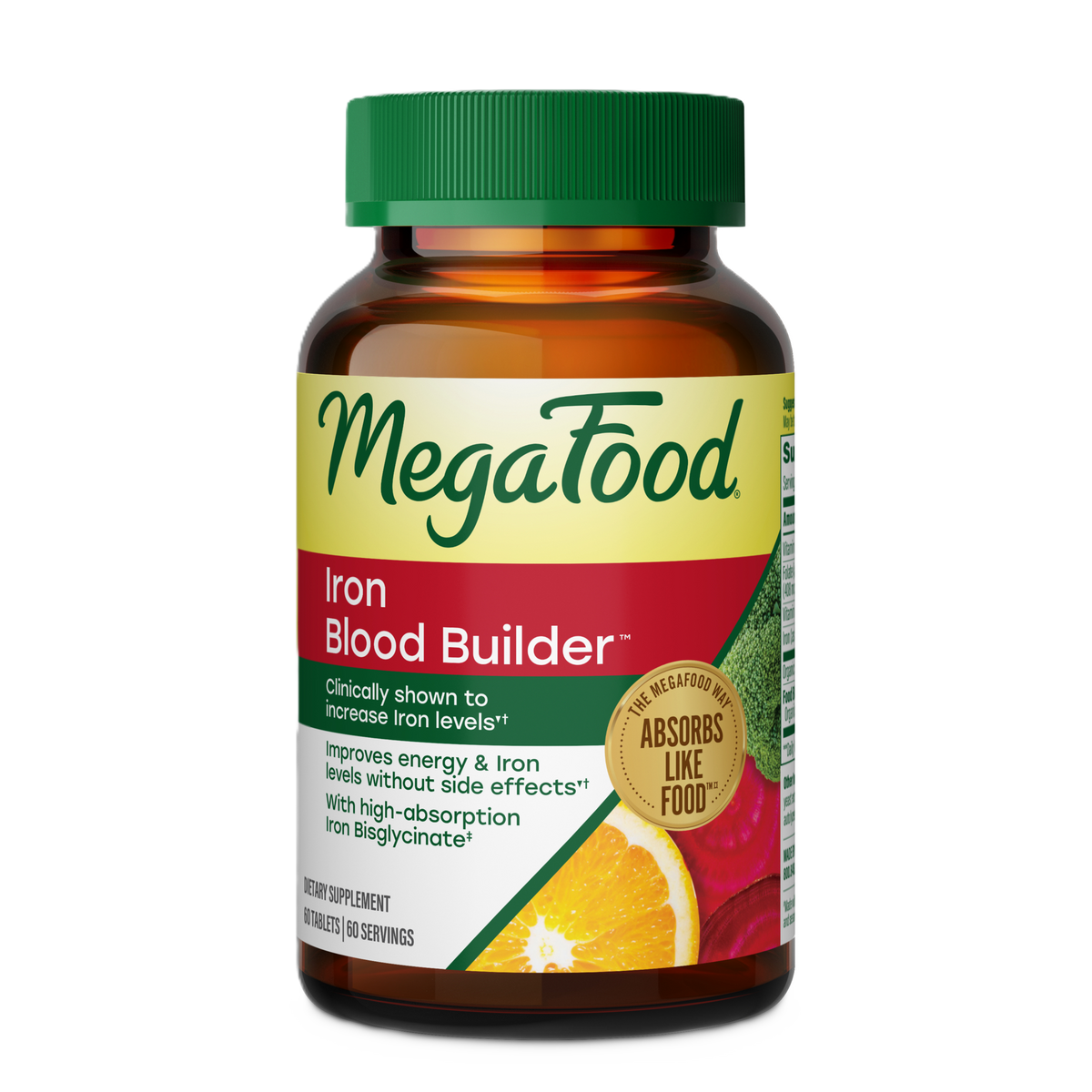
Our top-selling iron supplement is made with real food and key nutrients: we add beets and oranges, with folate, iron and B12, to create MegaFood Blood Builder Iron, clinically shown to help improve energy levels and combat fatigue.† Vitamin C is included to support iron absorption.†
Safe for menstruating women, teenage girls, pregnant women, vegans and vegetarians, athletes, and recent blood donors, all of whom are at increased risk of being low in iron.
- Combats fatigue and improves energy levels†
- Clinically shown to increase iron levels without side effects*†
- Delivers a gentle and effective 26 mg of iron per serving†
- High absorption iron bisglycinate** with vitamin C to support iron absorption†
- Includes folic acid and B12 which help maintain healthy red blood cell production†
- Gentle enough to take on an empty stomach; may be taken any time of day, even on an empty stomach
*Shown in an 8-week clinical trial to increase iron levels in individuals with low iron without causing nausea or constipation
**Iron bisglycinate is better absorbed than non-chelated forms of iron, such as ferrous sulfate
Directions: Only 1 tablet daily, any time of the day with a beverage. Do not exceed recommended intake unless recommended by a healthcare practitioner. Consumers should consult with their healthcare practitioners for advice regarding specific health conditions and recommended solutions.
Individual responses vary, and some people can still experience stomach upset with any iron supplement. If that's your experience, talk with your healthcare provider.
Quality and Dietary Suitability
Non-GMO Project Verified | Glyphosate Residue Free | Made without 9 Food Allergens* | Tested for 150+ Pesticides | Vegan
*Milk, eggs, peanuts, tree nuts, soy, wheat, fish, shellfish, and sesame
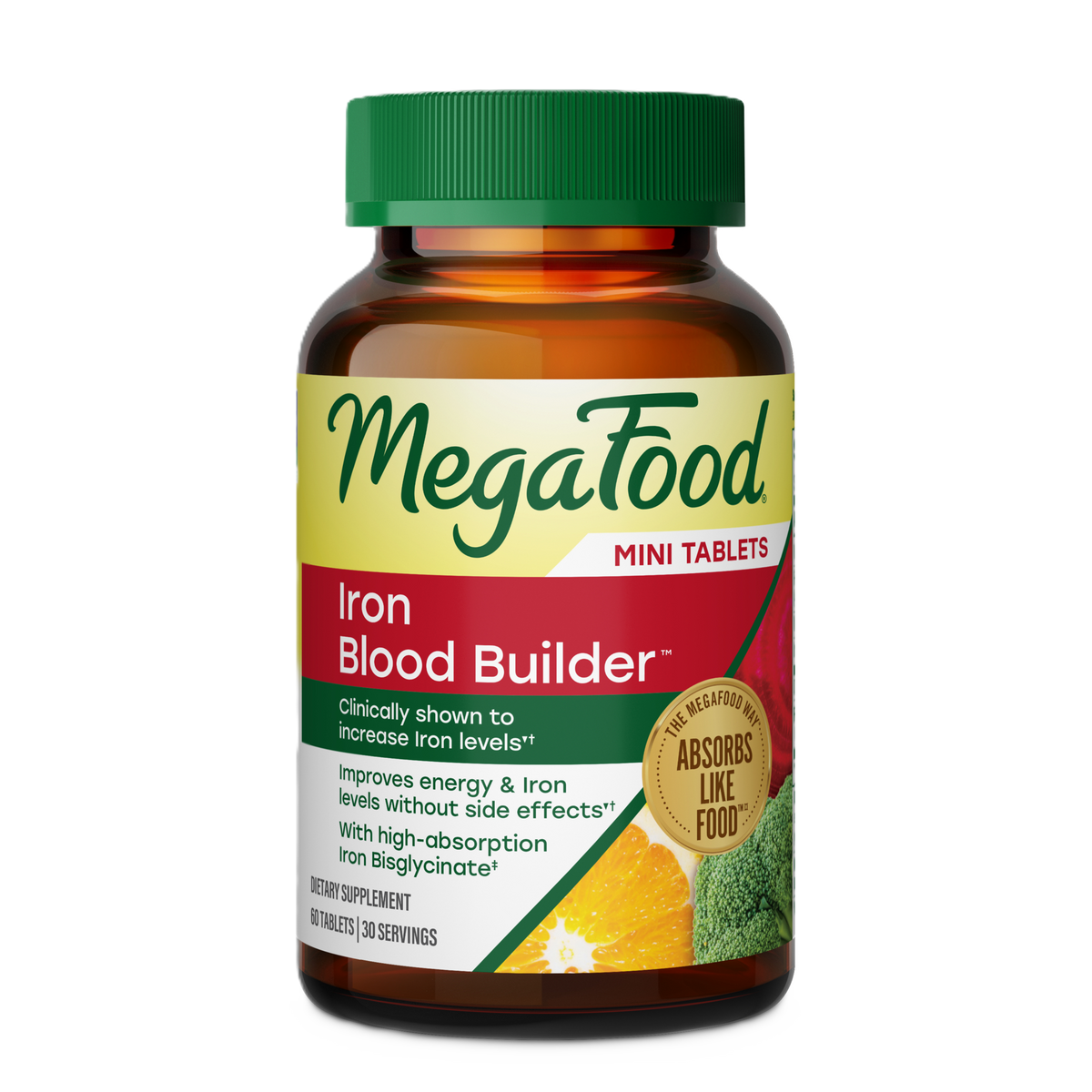
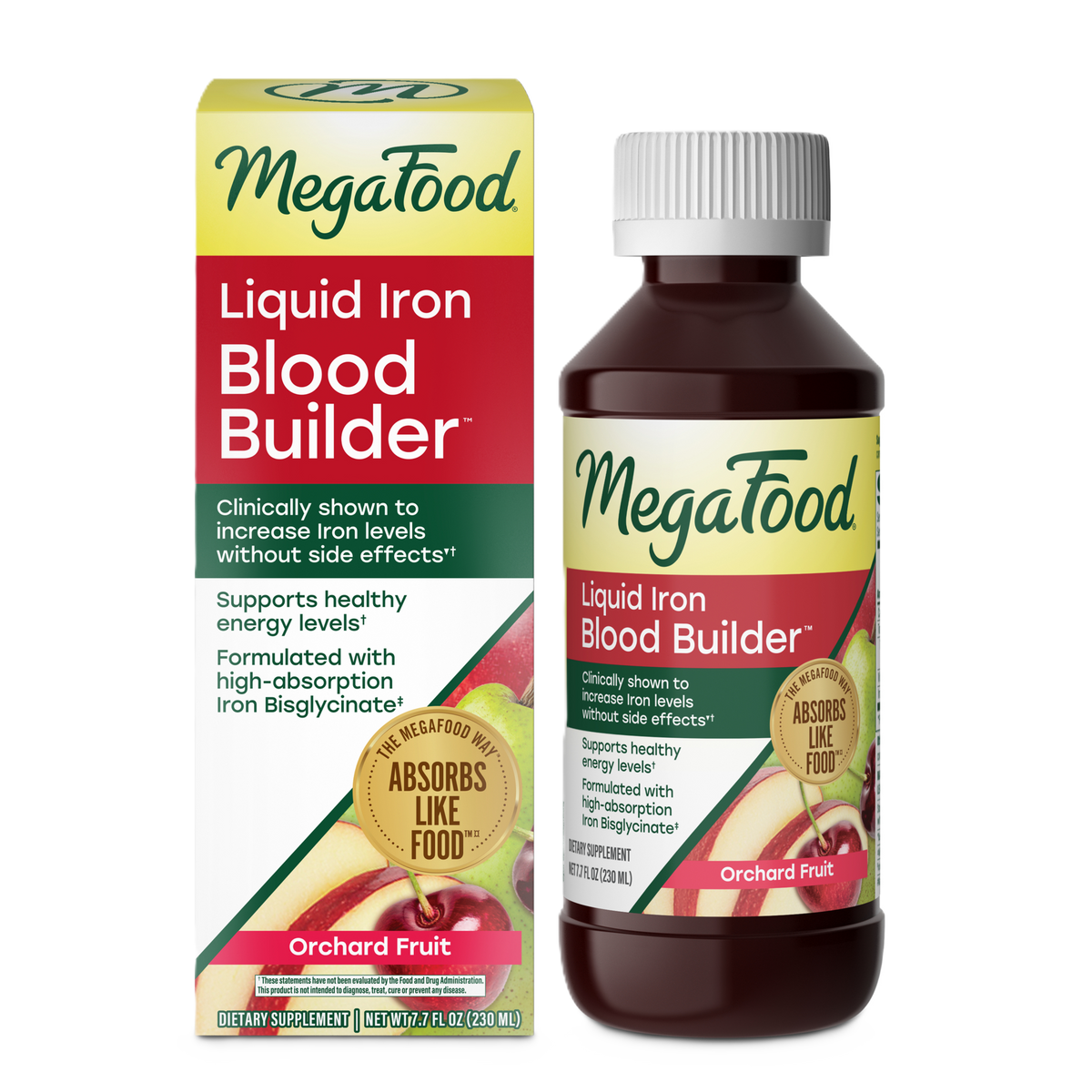
Also available in convenient mini tablets (Blood Builder® Iron Minis) and as Blood Builder® Liquid Iron Once Daily. Pair iron with a daily multi to help address gaps in your diet.†
Frequently Asked Questions
What is the difference between heme and non-heme iron? Heme iron comes from animal foods and is absorbed at roughly 15 to 35%. Non-heme iron comes from plants, eggs, dairy, fortified foods, and most supplements, and is absorbed at roughly 2 to 20%.
Which is absorbed better? Heme iron, and it's less affected by other foods. Non-heme iron can still meet your needs, especially when you pair it with vitamin C and limit tea and coffee at the same meal.
Is the iron in supplements heme or non-heme? Most supplements, including Blood Builder®, provide non-heme iron. Heme iron polypeptide products exist but are less common.
Can vegans and vegetarians get enough iron? Yes, with a little planning. Choose iron-dense foods like lentils, tofu, and pumpkin seeds, pair them with vitamin C, and ask your healthcare provider about checking ferritin.
Does coffee or tea block iron absorption? Their polyphenols can bind iron, so it may help to enjoy them an hour or so apart from iron-rich meals.
Should I take iron with food or on an empty stomach? Blood Builder® is gentle enough to take on an empty stomach and may be taken any time of day, even on an empty stomach. For other products, follow the label and your healthcare provider's guidance.
How do I know if my iron is low? Only a blood test can tell you. Ask your healthcare provider about ferritin, transferrin saturation, and a full blood count.
The Bottom Line
Heme and non-heme iron both have a place on your plate. Know where each comes from, pair non-heme iron with vitamin C, give coffee and tea some space, and check your levels with your healthcare provider. Small, steady choices add up.
Whether you eat meat, follow a plant-based diet, or fall somewhere in between, you have more say in how well your body uses iron than you might think.
Learn More
Explore more science-backed nutrition education on the The Source, by MegaFood.
References
NIH Office of Dietary Supplements, Iron Fact Sheet for Health Professionals: https://ods.od.nih.gov/factsheets/Iron-HealthProfessional/
NIH Office of Dietary Supplements, Iron Fact Sheet for Consumers: https://ods.od.nih.gov/factsheets/Iron-Consumer/
Monsen ER (1988), J Am Diet Assoc (source of the 15 to 35% heme and 2 to 20% non-heme absorption ranges): https://pubmed.ncbi.nlm.nih.gov/3290310/
Zhang et al. (2022), phytate and mineral bioavailability: https://pubmed.ncbi.nlm.nih.gov/33190514/
Yokoi and Konomi (2017), iron deficiency without anaemia and fatigue: https://pubmed.ncbi.nlm.nih.gov/28625177/
Blood Builder published clinical study (citation to be supplied)
Replace the 1990s CDC footnote with a current prevalence source


Leave a comment
This site is protected by hCaptcha and the hCaptcha Privacy Policy and Terms of Service apply.