
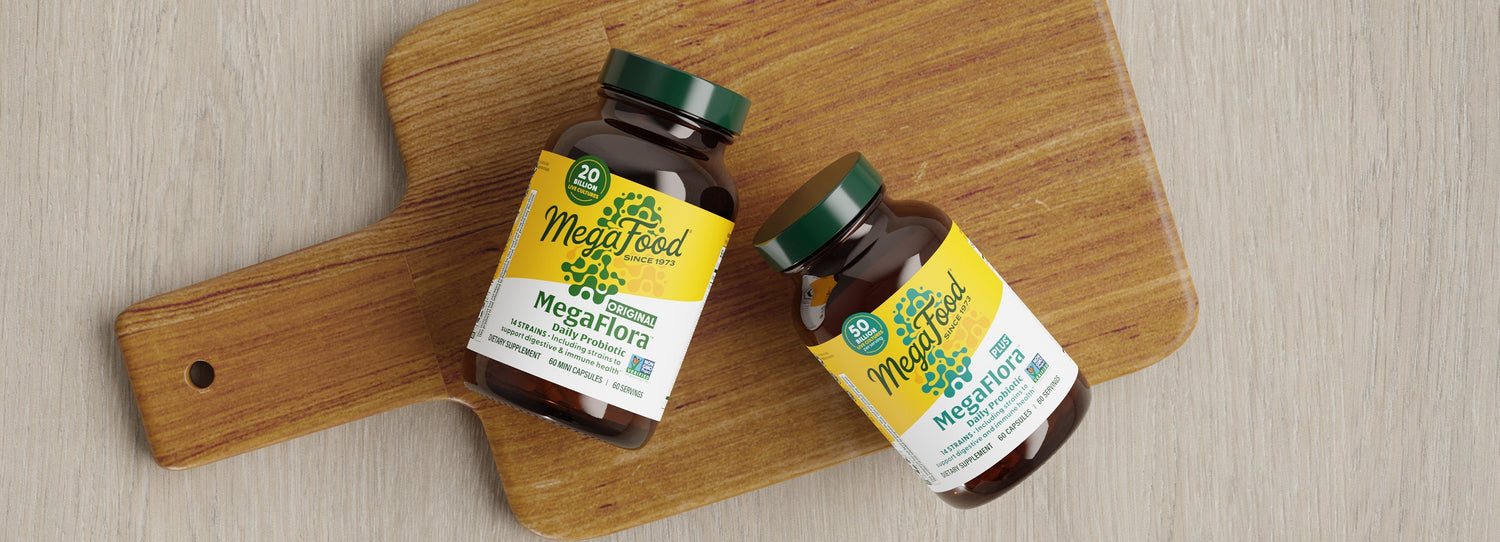
You’ve probably heard that probiotics support digestive health—but with so many species, strains, and CFU counts on labels, it can get confusing fast. Let’s simplify what probiotics really are, how they work, and why the details—like strain names and variety—actually matter.
The Basics: What Are Probiotics?
Probiotics are live microorganisms that, when consumed in adequate amounts, help support digestive and immune health. They naturally live in your gut and help maintain a healthy balance of good bacteria—a community that influences everything from digestion to overall wellness.
Everyday factors like stress, travel, or certain medications can disrupt that balance. Taking a daily probiotic helps restore and maintain healthy levels of beneficial bacteria, supporting gut comfort and regularity along the way.
Meet the Main Families: Lactobacillus and Bifidobacterium
Most probiotic supplements feature species from two main families—each with distinct benefits and roles in your digestive system.
Lactobacillus
Found primarily in the small intestine, Lactobacillus species help maintain a balanced pH and aid in nutrient breakdown1. They produce beneficial compounds like lactic acid that help keep digestion on track.
Common species include Lactobacillus plantarum, L. acidophilus, L. rhamnosus, and L. casei—some of which have been shown to support both digestive and immune function.
Bifidobacterium
These species typically reside in the large intestine (colon)2, where they help maintain regularity and overall gut comfort. They support the balance of healthy intestinal probiotics and contribute to a strong digestive foundation.
Common species include Bifidobacterium lactis, B. longum, B. bifidum, and B. infantis.
Together, these families work synergistically-supporting gut health from top to bottom while helping the body’s natural defenses stay strong.
The Power of Strain Specificity
You may have noticed that probiotic names often include letters and numbers—like Lactobacillus plantarum LP115 or Bifidobacterium lactis HN019. Those are strain identifiers, and they matter.
A strain ID indicates that a specific probiotic has been isolated, studied, and shown to provide measurable benefits. Even within the same species, different strains can behave differently—so identifying them helps ensure that the formula includes clinically studied, beneficial types of bacteria.
Including diverse, well-characterized strains—like B. lactis and L. acidophilus—supports a more balanced and resilient microbiome.
Why Variety (and Quality) Matter
The gut microbiome is complex and thrives on diversity. Products that combine multiple probiotic strains—often 10 or more—can help support a broader range of digestive and immune functions.
Multi-strain blends often include both acid-resistant and resilient species that can survive the journey through the digestive tract to reach where they’re most needed.
Just as important is potency. The best formulas are tested for purity and guaranteed for potency through expiration, ensuring that the live bacteria listed on the label are still active when you take them. Refrigeration can help maintain this potency—especially for high-quality, live-culture probiotics.
The Takeaway
Probiotics are an easy way to support digestive and immune health from the inside out. When choosing a probiotic supplement, look for:
- A variety of well-studied strains from both Lactobacillus and Bifidobacterium families
- Strain-specific labeling for transparency
- Verified potency through expiration
- Guidance for proper storage to maintain effectiveness
Used as part of your foundational health routine, probiotics can help restore balance, support comfort, and keep your gut ecosystem thriving.
References
- Walter J. (2008). Ecological Role of Lactobacilli in the Gastrointestinal Tract. Nature Reviews Microbiology / PMC. https://pmc.ncbi.nlm.nih.gov/articles/PMC2519286/
- Rivière A., et al. (2016). Bifidobacteria and Butyrate-Producing Colon Bacteria. Frontiers in Microbiology. https://www.frontiersin.org/articles/10.3389/fmicb.2016.00979/full


Leave a comment
This site is protected by hCaptcha and the hCaptcha Privacy Policy and Terms of Service apply.