
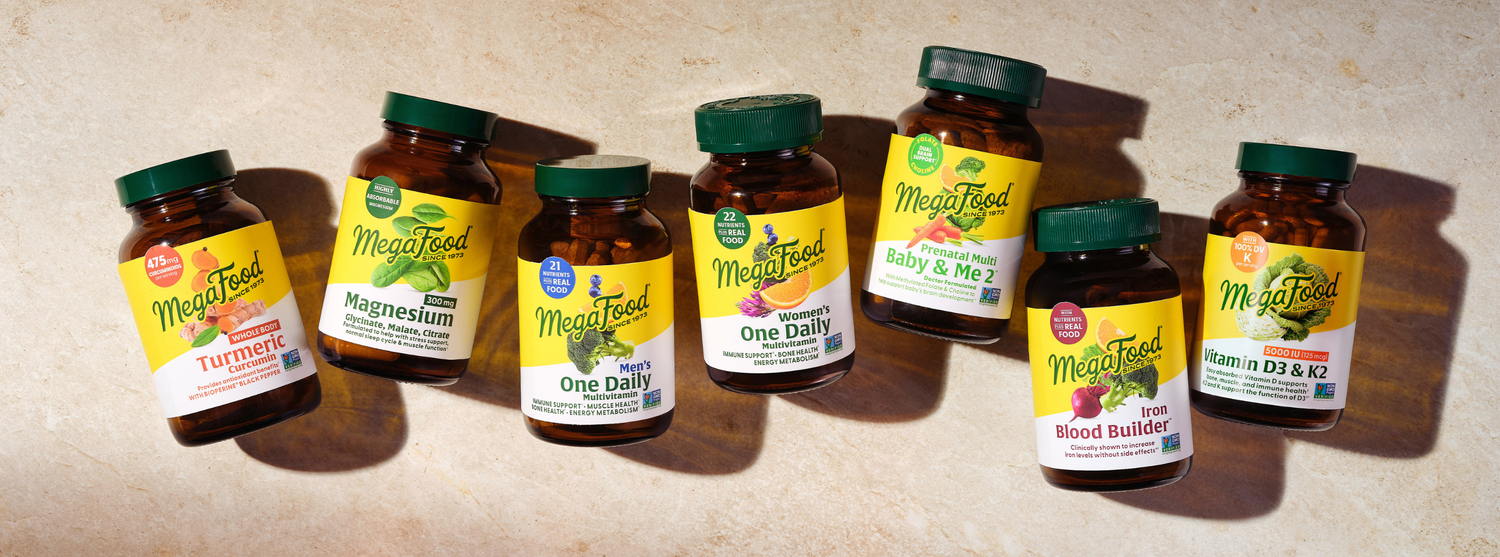
If you’ve ever wondered “What supplements should I take?” or “What are the best vitamins to take daily?”, you’re not alone. With more options than ever, building a supplement routine can feel more complicated than it needs to be.
To keep things simple for you, we’ve put together a three-step guide to building a supplement routine. It’s flexible, customizable, and designed to evolve with you as your needs change—without overwhelming your cabinet or your schedule.
Here’s how it works:
Step 1: Start with a Foundational Multivitamin
Your multivitamin is your daily base. It provides broad nutritional support and helps fill common nutrient gaps that can happen even with a balanced diet.
One well-chosen multivitamin taken consistently, forms the foundation of your daily routine. Whether that’s a tablet, capsule, gummy, or soft chew, what matters most is consistency. Choose one that fits your schedule and that you enjoy taking
Our multivitamins are crafted specifically to support the different health needs of varying genders, ages (more on that later!) You can find yours here.
Step 2: Add Daily Support (That Makes Sense for You)
These are supplements many people use most days to complement their multivitamin based on diet or lifestyle demands.
Find what’s right for you:
Magnesium — supports stress balance, relaxation, sleep, and muscle function (along with over 300 different enzyme reactions in the body!).†
Did you know? An estimated 50–60% of U.S. adults don’t meet recommended magnesium intake levels.1
Omega-3s — supports heart, brain, and overall wellness.†
Did you know? Most adults don’t consume enough EPA and DHA from diet alone.2
Iron Support — helpful for athletic lifestyles, menstruation, plant-forward diets, or low iron intake.†
Did you know? Iron deficiency is considered the most common micronutrient deficiency worldwide, affecting a large percentage of women of reproductive age. 3 4
Digestive Health — Prebiotics, Probiotics & Digestive Enzymes support comfortable digestion, nutrient breakdown, and help maintain a healthy gut microbiome — the community of beneficial microbes in your intestines that play a key role in digestion and overall health.†
Did you know? Stress, travel, and dietary changes can all affect digestive comfort.†⁹ ¹⁰
B Vitamins — including B6, B12 & folate help convert food into cellular energy, support nervous system health, and aid in the production of neurotransmitters tied to mood health.*
Did you know? National nutrition surveys show that a significant portion of adults don’t meet recommended intakes for key B vitamins, especially B6, B12, and folate. 5 6
Vitamin D3 — supports bone, immune, and muscle health, and helps the body absorb calcium effectively.
Did you know? An estimated 35–40% of U.S. adults have low vitamin D levels, and rates are even higher in regions with limited sun exposure. 7 8
You don’t need all of these—just the 1–2 that match where you are right now.
Step 3: Add a Goal or Need-State Support
These are added seasonally, or during times when you want more targeted support—based on what you’re working on right now:
Beauty + Healthy Aging — consider collagen, sea moss, or a skin, hair, and nails complex to support visible signs of wellness and graceful aging.†
Metabolic Health — consider berberine to help support healthy blood sugar already in the normal range.†
Performance — reach for creatine or shilajit to support your strength, stamina, and performance goals.†
Stress Support — consider ashwagandha or calming herbal blends to help support a balanced stress response.†
Sleep Support — consider melatonin to support sleep goals, or magnesium to aid relaxation and support a healthy sleep–wake rhythm.†
Healthy Aging — consider High Absorption CoQ10 for heart health & healthy aging support as well as NAD+ Boost to support healthy aging at the cellular level.†
Think of these as optional plug-ins that let you personalize your routine as your goals and seasons of life change.
How to Make Your Mix
Gender, Age, and Lifestyle Considerations
Your supplement routine should flex with your body, your goals, and your season of life. Nutrient needs can shift with hormones, stress levels, diet style, training intensity, sleep patterns, and aging—sometimes subtly, sometimes significantly.
The sections below highlight common considerations for different life stages and identities to help guide how you use the three-step routine above. There’s no single “right” mix—just informed choices that make sense for you.
Women
Women often have changing nutrient needs across the month and across life stages. Common areas of focus may include:
- Iron needs due to menstruation
- Energy and stress support during busy or high-demand seasons
- Bone health support over time
- Hormonal shifts that can impact sleep, mood, and digestion
These factors can all influence which daily supports or short-term goal supplements feel most useful at different times of year.
Women Over 55
After midlife, nutritional priorities often evolve. Common areas of focus may include:
- Bone health and mineral status
- Heart and cognitive wellness
- Energy metabolism as the body changes with age
- Sleep quality and stress resilience
- Shifts in iron needs (many no longer require supplemental iron)
This is often a season where healthy aging and long-term wellness supports become more central to a routine.
Men
Men often look to supplements to support performance, endurance, and day-to-day energy, alongside long-term heart health. Common considerations include:
- Cardiovascular and metabolic health
- Muscle function, recovery, and physical performance
- Stress management and sleep quality
- Cognitive focus during demanding work or training schedules
Lifestyle, training intensity, and stress load often shape how much layered-in support feels helpful.
Men Over 55
With age, priorities often shift toward longevity, vitality, and maintaining everyday function. Common considerations include:
- Heart and circulatory health
- Cognitive support and mental clarity
- Energy and stamina
- Muscle maintenance and joint comfort
- Sleep quality and recovery
This is a stage where many people start thinking more intentionally about healthy aging from the inside out.
Pregnancy
Pregnancy increases the body’s demand for many nutrients. Key considerations include:
- Higher needs for foundational nutrients that support fetal development
- Digestion changes that can affect comfort and nutrient absorption
- Energy demands and shifting sleep patterns
- The importance of choosing supplements intentionally and with professional guidance
This is a time when simplicity, consistency, and careful selection matter most.
Postpartum
After birth, the body is in a period of recovery and recalibration. Common focus areas include:
- Replenishing nutrients used during pregnancy
- Supporting energy during disrupted sleep
- Mood and stress balance
- Ongoing nutritional needs for those who are breastfeeding
Needs can change quickly during this phase, so routines often evolve more frequently than usual.
Non-Binary Considerations
Supplement needs aren’t defined by gender alone—they’re shaped by biology, hormones, lifestyle, stress, diet, and goals. Non-binary individuals may consider:
- Whether their body currently benefits more from iron-inclusive or iron-free support
- How hormone therapy (if applicable) may influence nutrient needs
- Energy, stress, performance, sleep, and cognitive goals—just like anyone else
The most effective routine is one that’s built around how your body feels and functions.
A Routine That Evolves With You
Your routine isn’t meant to stay static—it naturally evolves as your body, lifestyle, and priorities change. The goal isn’t to “take more over time”—it’s to adjust wisely, using your multivitamin as your anchor and layering thoughtfully as your needs change.
There’s no perfect supplement routine—just one that’s right for you. Use this guide as your starting point, listen to your body, and adjust as your goals and seasons shift. If you have specific health concerns to address, please consult with your healthcare practitioner to determine the best products for you.
Sources
- Omofuma OO, et al. Trends in Reported Calcium and Magnesium Intake in U.S. Adults… (NHANES analysis; shows <50% meeting magnesium EAR from diet, supporting the ~50–60% shortfall framing). PMC+1
- Murphy RA, et al. Long-chain omega-3 fatty acid… (Notes DGA review of NHANES/WWEIA data finding ~90% of Americans below 250 mg/day EPA+DHA; supports “most adults don’t consume enough EPA/DHA”). PMC+1
- World Health Organization (WHO). Anaemia – Fact sheet (States iron deficiency is the most common nutritional deficiency leading to anaemia). World Health Organization+1
- Percy L, Mansour D, Fraser I. Iron deficiency and iron deficiency anaemia in women. (Reproductive-age women burden; supports “large percentage of women of reproductive age”). ScienceDirect
- USDA Agricultural Research Service. Usual Nutrient Intake from Food and Beverages, by Gender and Age, WWEIA/NHANES 2017–Mar 2020 Prepandemic (population intake distributions / % below DRI values for nutrients including folate and B6). ARS+1
- NIH Office of Dietary Supplements. Vitamin B12 – Fact Sheet for Health Professionals (NHANES-based deficiency/insufficiency estimates; supports national-survey framing for B12 status concerns). Office of Dietary Supplements
- StatPearls (NCBI Bookshelf). Vitamin D Deficiency (States ~35% of U.S. adults are vitamin D deficient; supports the 35–40% estimate). NCBI
- Cui A, et al. Prevalence, trend, and predictor analyses of vitamin D… (NHANES-based analysis; supports prevalence + seasonal/region/sun-exposure variation framing). PMC
- National Institute of Diabetes and Digestive and Kidney Diseases (NIDDK). Your Digestive System & How It Works.
- Harvard Health Publishing. The Gut–Brain Connection.


Leave a comment
This site is protected by hCaptcha and the hCaptcha Privacy Policy and Terms of Service apply.