
Photo Credit: Daniel Ebersole
At MegaFood, we have always believed that healthy people and a healthy planet go hand in hand. To demonstrate our commitment to supporting both, we partnered with the Center for Regenerative Agriculture and Resilient Systems, California State University, Chico for a groundbreaking three-year study.
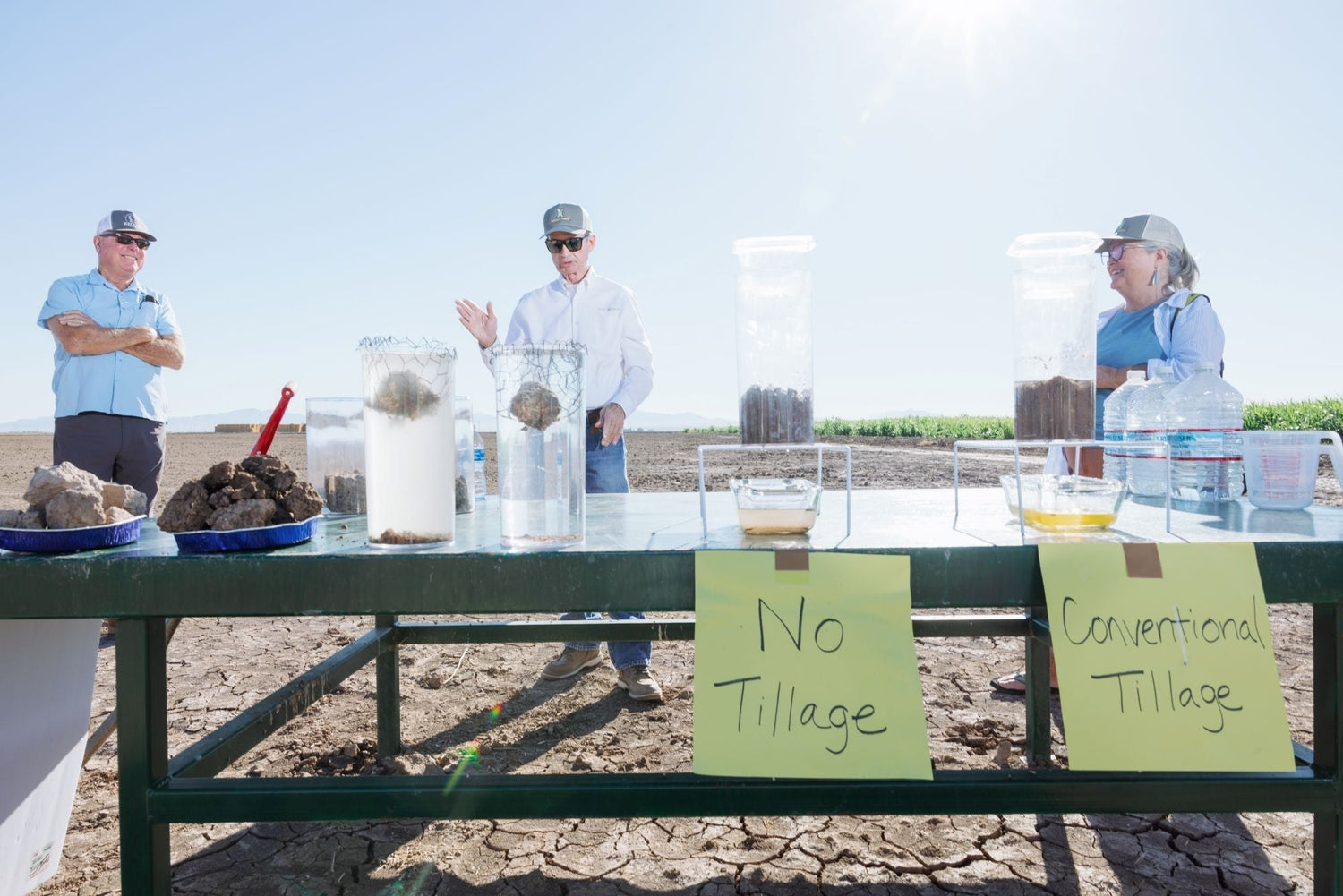
At Hayday Farms in Blythe, California, researchers compared traditional, chemical-heavy farming side-by-side with regenerative agriculture. While conventional methods rely on heavy tilling and synthetic chemicals, the regenerative field used practices like planting diverse cover crops and minimizing soil disruption. By letting nature do the heavy lifting, this study aimed to show how the way we grow food directly impacts the vitality of our world, starting with the soil.
In the last two years, we’ve seen that conventional agriculture showed faster early crop growth, but that doesn’t tell the whole story. The regenerative field produced the exact same high-quality crop yields as the conventional field but used fewer synthetic inputs, producing significant data that makes the case for soil-supporting farming practices.
Here’s what we’ve learned so far from the regenerative field:
Improved soil health through:
- Increased organic matter - allowing for better nutrient availability for crops
- Increased moisture retention - supports plant development and can help mitigate flooding
- Reduced bulk density - important for root development
- Increased moisture retention - supports plant development and can help mitigate flooding
- Biological activity – significantly greater total microbial biomass, including mycorrhizal fungi which was over 4 times greater in the regenerative field over the conventional. These powerhouse microorganisms enhance plant growth, nutrient and water uptake, disease resistance, and soil health through a symbiotic relationship with plant roots.
Farmer Economics: Enhanced farmer profits through higher yields and lower input costs. In total, these could amount to over $500 per hectare.
Carbon Sequestration: By 2023, the regenerative farm stored more carbon in the soil than the conventionally farmed field. This happened because practices like keeping the ground covered year-round and supporting natural nutrient cycles helped the soil capture and hold onto more carbon over time.
Why does this matter? Healthy soil can play an important role in addressing climate change. Regenerative farming has the potential to build healthier topsoil, support smarter water use, and help grow more nutrient-dense crops. Research like this helps strengthen the case for adopting regenerative farming practices on a larger scale.
Thank you for checking in on our progress, following our journey to support soil health, and please stay tuned for a published manuscript that will contain the real data!




Leave a comment
This site is protected by hCaptcha and the hCaptcha Privacy Policy and Terms of Service apply.