



Supporting Digestion, Resilience, and Whole-Body Wellness Across the Lifespan
Healthy aging is about more than simply adding years to life. For many people, it also means maintaining energy, resilience, comfort, mobility, and overall wellbeing over time. One of the most important systems connected to those everyday experiences is the gut.
The digestive system does far more than process food. The gut helps break down and absorb nutrients, supports immune function, communicates with the nervous system, and plays an important role in helping the body maintain balance across many interconnected systems.
Because digestive health influences so many aspects of overall wellness, the gut has become an important focus within conversations around healthy aging and longevity.
Supporting gut health is not about following a perfect diet or chasing quick fixes. In many cases, small, consistent habits practiced over time can help support digestion, microbial balance, and whole-body wellness across the decades.
How Gut Health Connects to Healthy Aging
In longevity science, the term healthspan refers to the years lived with strength, resilience, independence, and quality of life.
Gut health contributes to many of the systems connected to healthy aging.
The digestive tract helps break down food and absorb nutrients the body uses for:
- energy metabolism
- tissue repair
- nervous system function
- immune support
- cellular maintenance
When digestion and nutrient absorption are well supported, the body is better equipped to maintain the processes connected to day-to-day wellness and long-term resilience.
The gut also communicates continuously with other systems throughout the body. One of the most discussed connections is the gut-brain axis, a communication network involving the nervous system, hormones, and the immune system.⁵
Because of these connections, gut health influences much more than digestion alone. It helps shape how the body responds to stress, utilizes nutrients, maintains balance, and adapts over time.
Understanding the Gut Ecosystem
The digestive system is a connected ecosystem that supports digestion, nutrient absorption, immune function, and overall wellness.
The Gut Microbiome
One of the most discussed aspects of digestive health today is the gut microbiome — the trillions of bacteria and other microorganisms that naturally live within the digestive tract.¹
These microorganisms help break down certain dietary compounds, produce beneficial metabolites, and interact with immune and nervous system pathways.
Research continues to explore how the microbiome influences digestion, metabolism, immune function, and healthy aging.⁷
The Intestinal Lining
The intestinal lining acts as a selective barrier that helps absorb nutrients while supporting protection between the digestive tract and the rest of the body.
The Gut-Brain Connection
The digestive system and nervous system are closely connected. Signals continuously travel between the gut and brain through the endocrine and nervous system. This is why stress, sleep, mood, and digestion often influence one another.
Together, these systems help the body digest food, absorb nutrients, maintain balance, and respond to daily environmental inputs.
How Gut Health Changes Over Time
Like many systems in the body, digestion naturally changes with age. Nutrition, stress, sleep, daily activity, medications, and lifestyle habits can all influence digestive wellness over time.
Digestive enzyme production and stomach acid levels may gradually shift with age, which can affect how efficiently certain nutrients are broken down and absorbed.
The gut microbiome may also change across the lifespan. Research suggests microbial diversity is associated with resilience and overall health, while diet quality, physical activity, stress, and sleep all help influence microbial balance.⁶
Because the gut and nervous system are closely connected, stress can also influence digestion, appetite, bowel patterns, and digestive comfort.
These shifts are a normal part of aging, but supportive daily habits can help maintain digestive balance over time.
Everyday Signs Your Gut May Need More Support
Digestive health looks different from person to person, and occasional digestive changes are normal. Still, some lifestyle factors and signs may suggest your digestive system could benefit from additional support, including:
- occasional bloating or digestive discomfort
- inconsistent bowel patterns
- feeling overly full after meals
- low intake of fiber-rich foods
- periods of high stress
- reduced food variety
- irregular eating patterns
Because digestion connects with many systems throughout the body, supporting gut health is often less about “fixing” one symptom and more about supporting consistent daily habits over time.
How Nutrition Supports Gut Health
The gut depends on a wide range of nutrients and dietary compounds to support digestion, microbial balance, and intestinal health.
Fiber and the Gut Microbiome
Fiber is one of the most important nutritional components for gut health.
Found in fruits, vegetables, legumes, nuts, seeds, and whole grains, dietary fiber helps support regularity and provides fuel for beneficial gut bacteria.³
When gut bacteria ferment certain types of fiber, they produce short-chain fatty acids such as butyrate. These compounds help support the cells that line the colon and play a role in maintaining gut barrier function and microbial balance.⁴
Simple Ways To Add More Fiber
For many people, increasing fiber gradually can feel more manageable than completely changing how they eat. Small changes can add up over time, such as:
- adding berries or chia seeds to breakfast
- choosing oats or whole grains more often
- including beans or lentils in soups, bowls, or salads
- adding an extra vegetable to meals
- swapping processed snacks for nuts or fruit
Fermented Foods and Digestive Wellness
Fermented foods contribute beneficial compounds and microorganisms to the diet.
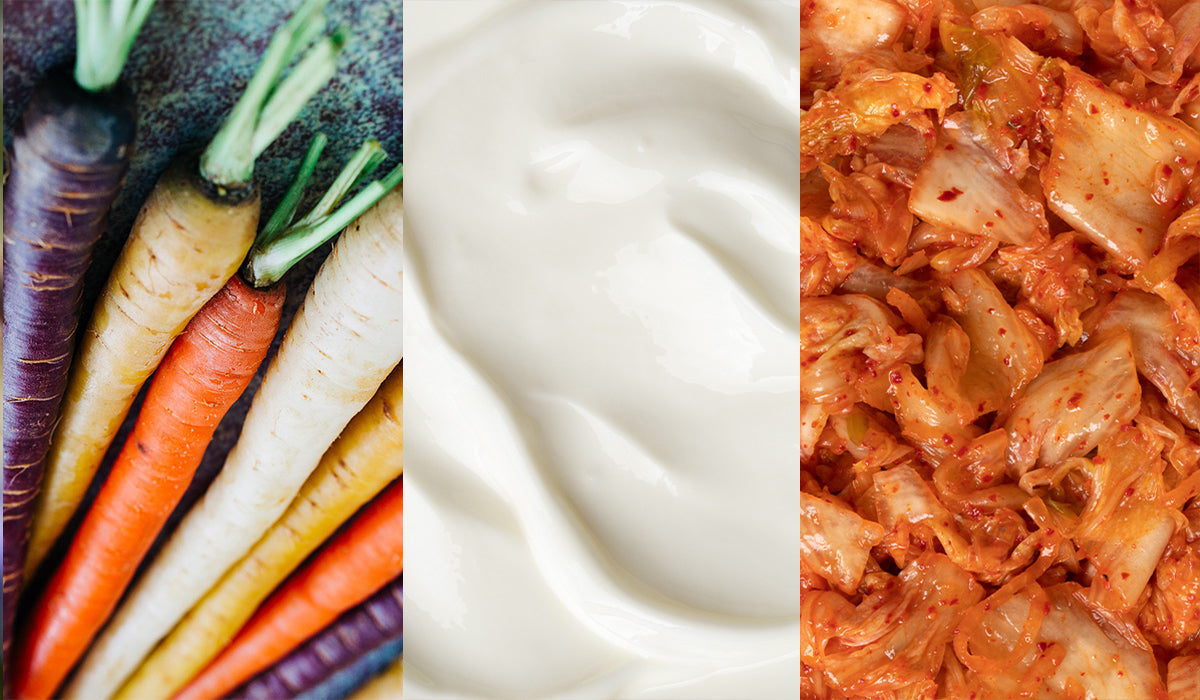
Foods such as yogurt, kefir, kimchi, sauerkraut, miso, and tempeh have long histories of traditional use and are often included in dietary patterns that support digestive wellness.
Many people already eat fermented foods without realizing it. Yogurt, tempeh, miso, and sauerkraut can often be incorporated into meals and snacks in simple, approachable ways.
Prebiotics and Probiotics
Prebiotics are compounds that help nourish beneficial gut bacteria. Many fiber-rich foods naturally contain prebiotic compounds, including onions, garlic, asparagus, bananas, oats, and legumes.
Probiotics are live microorganisms that may help support microbial balance when consumed in adequate amounts. Different probiotic strains have different functions, and research continues to explore how specific strains interact with digestive and immune health.²
Foods That Naturally Support Gut Health
Many foods naturally provide the fiber and compounds that help support digestive and microbiome health, including:
- legumes
- oats
- berries
- leafy greens
- garlic and onions
- bananas
- nuts and seeds
- fermented foods like kimchi, yogurt, and sauerkraut
Hydration also plays an important role in digestive health by helping support normal digestion and bowel regularity.
As with many aspects of healthy aging, overall dietary patterns and consistency matter more than isolated foods or short-term wellness trends.
Daily Habits That Support Digestive Wellness
Gut health is influenced not only by nutrition, but also by broader lifestyle patterns.
Regular movement helps support circulation, metabolic function, and bowel regularity, while sleep plays an important role in digestive health.⁸
Stress management matters, too. Because the digestive system and nervous system are closely connected, chronic stress can influence digestion and digestive comfort over time.
Food variety is another important factor. Different plant foods provide different fibers and nutrients that help support microbial diversity and overall nutritional intake. Keep things fun and challenge yourself to how many different plants you can eat in a day!
What Matters Most for Gut Health?
Supporting gut health often comes down to consistent, sustainable habits practiced over time:
- eating a variety of fiber-rich plant foods
- including fermented foods as part of a balanced diet
- staying hydrated
- daily activity
- managing stress and prioritizing sleep
- focusing on long-term consistency rather than quick fixes
Healthy aging is not only about longevity, but also about supporting resilience, nourishment, and overall wellbeing across the years.
Frequently Asked Questions
Can gut health change with age?
Yes. Digestive function, appetite, microbial diversity, and eating patterns can all shift over time. Lifestyle habits such as nutrition, activity, hydration, sleep, and stress management can help support digestive wellness throughout the lifespan.
What foods help support gut health?
Fiber-rich plant foods such as fruits, vegetables, legumes, oats, nuts, seeds, and fermented foods can help support digestion and the gut microbiome as part of a balanced diet.
Do I need a perfect diet to support gut health?
No. Supporting gut health is generally about consistent daily habits rather than perfection. Small, sustainable changes practiced over time can help support digestive wellness and overall health.
Explore the rest of our Longevity Series to learn how nutrition and daily habits support healthy aging — from foundational longevity principles to brain health, skin health, joint health, and other systems that shape wellness across the lifespan.
References
- National Institutes of Health. The Human Microbiome Project.
- National Center for Complementary and Integrative Health. Probiotics: What You Need To Know.
- Harvard T.H. Chan School of Public Health. Fiber.
- Sonnenburg ED, Sonnenburg JL. Starving our microbial self: the deleterious consequences of a diet deficient in microbiota-accessible carbohydrates. Cell Metabolism. 2014.
- Cryan JF, O’Riordan KJ, Cowan CSM, et al. The Microbiota-Gut-Brain Axis. Physiological Reviews. 2019.
- Singh RK, Chang HW, Yan D, et al. Influence of diet on the gut microbiome and implications for human health. Journal of Translational Medicine. 2017.
- Valdes AM, Walter J, Segal E, Spector TD. Role of the gut microbiota in nutrition and health. BMJ. 2018.
- CDC. Benefits of Physical Activity.



Leave a comment
This site is protected by hCaptcha and the hCaptcha Privacy Policy and Terms of Service apply.