


Reviewed for scientific accuracy by Dr. David Gundermann, PhD, Nutrition Scientist
The human body is constantly adapting.
From responding to a demanding workout to navigating a busy week, caring for family members, or adjusting to major life changes, our bodies are continually responding to the world around us. Adequate responses to stress requires a complex network of biological systems that help us adapt to the world around us.¹
Because these systems influence everything from sleep and cognitive function to digestion and energy metabolism, they also play an important role in healthy aging. The body's response to stress is closely connected to many of the same systems that support healthspan—the years lived with strength, resilience, independence, and quality of life.
Supporting a healthy stress response is not about avoiding life's challenges. It is about helping the body adapt to life's demands and maintain healthy function over time. As researchers continue to explore the science of longevity, the ability to navigate everyday stressors has become an increasingly important part of the conversation.
How the Body Responds to Stress
The body's stress response evolved to help us adapt to changing situations.
When the brain perceives a stressor, it activates a coordinated network involving the nervous and endocrine systems. These responses helps prepare the body to meet immediate demands by increasing alertness, mobilizing energy, and directing resources where they are needed most.¹
Several signaling molecules help coordinate this process, including:
- Adrenaline
- Cortisol
- Norepinephrine
- Various nervous system and immune signaling pathways
Together, these systems help the body respond to physical, emotional, and environmental challenges.
Whether preparing for a presentation, caring for a loved one, completing a demanding workout, or navigating a busy week, the stress response helps the body adapt to the moment. The goal is not to avoid activating this system. Rather, healthy aging depends on the body's ability to activate the response when needed and adapt appropriately to changing demands.
Understanding Cortisol
Few wellness topics have received as much attention in recent years as cortisol.
Cortisol is a hormone produced by the adrenal glands that helps regulate:²
- Energy metabolism
- Immune function
- The sleep-wake cycle
- Blood sugar balance
- The body's response to physical and emotional demands
Because cortisol is released as part of the stress response, it is often portrayed negatively online. In reality, cortisol performs important functions throughout the day.
In fact, cortisol naturally follows a daily rhythm. Levels typically rise in the morning to help support wakefulness and gradually decline throughout the day.²
Rather than viewing cortisol as something to eliminate, researchers increasingly focus on the broader systems that help the body adapt to life's demands and maintain healthy function over time.
How a Healthy Stress Response Supports Healthspan
In longevity science, healthspan refers to the years lived with strength, independence, resilience, and quality of life.
The body's response to stress influences many aspects of daily wellbeing, including sleep, cognitive function, energy levels, and digestion. Over time, these systems help shape how we feel, function, and adapt to life's demands.
Sleep and Recovery
Sleep is one of the most important foundations of healthy aging.
Sleep supports recovery, nervous system regulation, cognitive function, and many of the body's normal maintenance processes.³ At the same time, stressful periods can sometimes make it more difficult to unwind and maintain healthy sleep habits.
Because quality sleep helps support both physical and mental wellbeing, it remains one of the most important habits for supporting long-term health.
Brain Function
The brain plays a central role in how we perceive and respond to stress.
Life's demands can influence focus, attention, mood, and mental energy. Likewise, habits that support cognitive wellbeing—including movement, restorative sleep, social connection, and mental engagement—can help support mental performance and focus during busy or demanding times.
The Gut-Brain Connection
The digestive system and nervous system communicate continuously through what is often called the gut-brain axis.⁴ This communication helps explain why periods of stress can sometimes influence more than thoughts and emotions alone. Many people notice changes in appetite, digestive comfort, or digestive patterns during especially busy or demanding times.
The gut-brain connection highlights just one of the many ways the body responds and adapts to life's demands. While nutrition provides an important foundation, some people also look to botanicals as part of their approach to supporting a healthy stress response.
Adaptogens and the Body's Response to Stress
Adaptogens are herbs traditionally used to support the body's ability to adapt to physical, mental, and environmental stressors.⁶
Common adaptogens include:
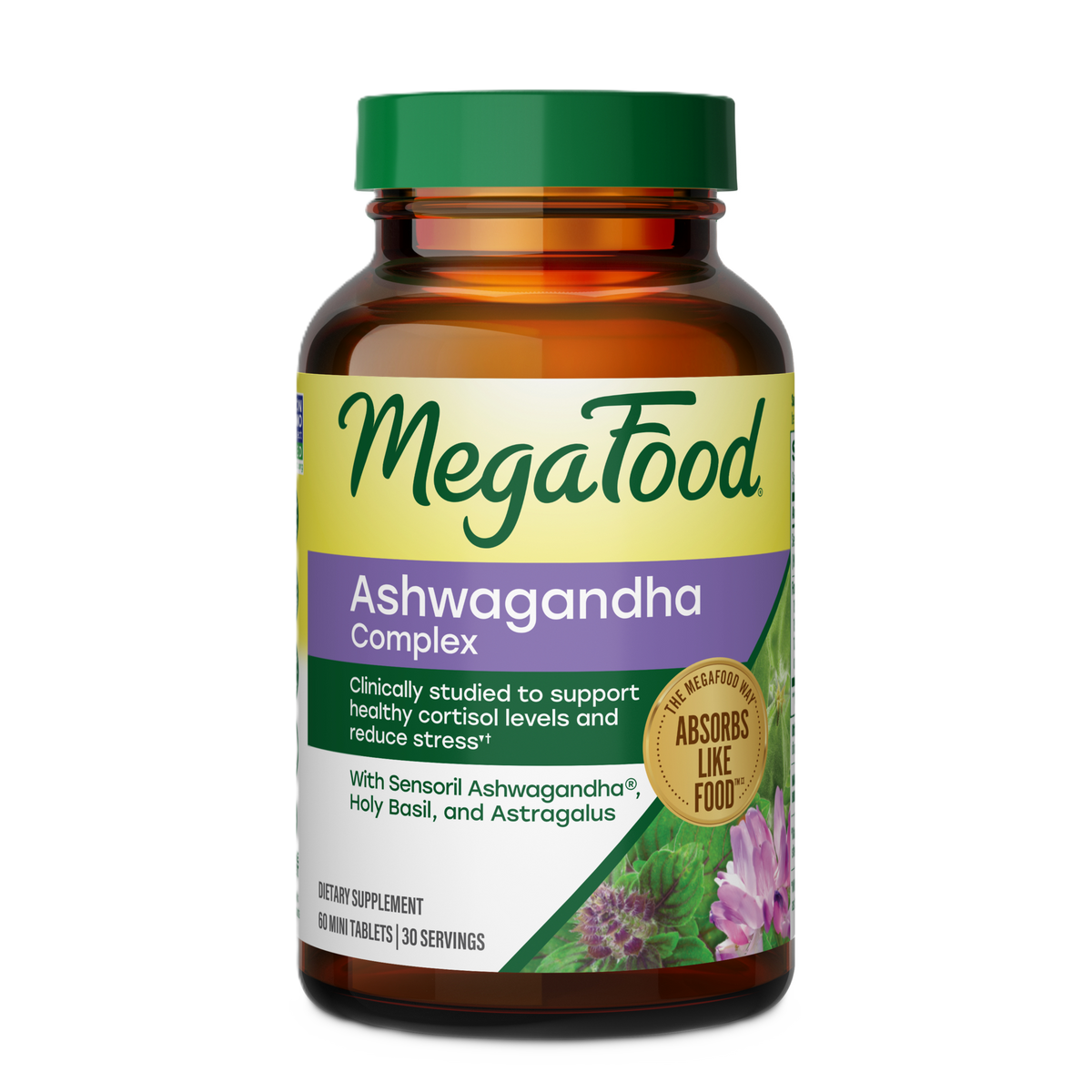
- Ashwagandha — one of the most widely studied adaptogenic herbs. Specific forms such as KSM-66® Ashwagandha root extract have been clinically studied for their ability to support the body's response to stress and healthy cortisol levels. Ashwagandha has also been studied for its ability to help reduce feelings of stress and occasional anxiousness while helping the body adapt to everyday stressors.
- Holy Basil (Tulsi) — a traditional adaptogenic herb that helps support the body's response to stress. Holy basil has also been studied for its ability to support mental performance and response time.
- Bacopa — a clinically studied adaptogenic botanical traditionally used to support cognitive wellbeing and resilience. Today, it remains a popular ingredient in wellness routines focused on helping the body adapt to everyday demands.
While research on adaptogens continues to evolve, interest in these botanicals reflects growing recognition of the many ways nutrition and lifestyle may help support the body's response to occasional stress.
Daily Habits That Support a Healthy Stress Response
Supporting a healthy stress response involves more than a single nutrient, herb, or wellness practice. Instead, it is shaped by the patterns and routines that become part of daily life. Many of the same habits associated with healthy aging can also help support the body's ability to respond to everyday demands, including:
- Regular physical activity
- Spending time outdoors
- Meaningful social connection
- Mindfulness and reflective practices
- Consistent sleep habits
Individually, these habits may seem simple. Over time, however, they can help support the adaptability and capacity that allow us to continue engaging with the people, activities, and experiences that give life meaning.
Supporting Stress for the Long Term
Life will always include challenges, responsibilities, and periods of change. Supporting a healthy stress response is not about avoiding those experiences—it is about helping the body adapt to them. Through nutrition, movement, sleep, and other daily habits, we can support the body's ability to navigate life's demands while promoting healthy aging over time.
In that way, supporting a healthy stress response becomes one more way to help nurture the healthspan that makes those years meaningful.
References
- McEwen BS. Protective and Damaging Effects of Stress Mediators. New England Journal of Medicine. 1998.
- Endocrine Society. Cortisol and the Stress Response.
- National Institutes of Health. Sleep and Health.
- Cryan JF, O'Riordan KJ, Cowan CSM, et al. The Microbiota-Gut-Brain Axis. Physiological Reviews. 2019.
- NIH Office of Dietary Supplements. Magnesium Fact Sheet for Health Professionals.
- Lopresti AL, Smith SJ, Malvi H, Kodgule R. An Investigation into the Stress-Relieving and Pharmacological Actions of Ashwagandha. Medicine. 2019.
- National Institute on Aging. Social Isolation, Loneliness, and Health.




Leave a comment
This site is protected by hCaptcha and the hCaptcha Privacy Policy and Terms of Service apply.