
Understanding the Differences Between K1 and K2
Vitamin K may not be as well known as vitamin D, magnesium, or iron, but it's involved in some surprisingly important jobs in the body.
From supporting healthy blood clotting to helping maintain bone strength and cardiovascular health, vitamin K helps support functions that affect your health every day. Yet many people don't realize that vitamin K isn't just one nutrient.†
The two most common forms, vitamin K1 and vitamin K2, each play distinct roles. While vitamin K1 is best known for supporting healthy blood clotting, vitamin K2 has gained attention for its role in supporting healthy bones, healthy vascular function, and cardiovascular health.†
Here's what to know about vitamin K, how K1 and K2 differ, and why both forms matter.
What Is Vitamin K?
Vitamin K is a fat-soluble vitamin that helps support several important functions throughout the body.
Unlike some nutrients that exist in only one form, vitamin K occurs in multiple forms. The two most common are:
- Vitamin K1 (phylloquinone or phytonadione)
- Vitamin K2 (menaquinone)
Both help to support overall health and wellbeing, but only vitamin K1 contributes to overall vitamin K intake, according to the FDA. For this reason, you won’t see a Percent Daily Value (% DV) listed for vitamin K2 on a product’s Supplement Facts Panel.
Vitamin K1 and Healthy Blood Clotting
Vitamin K1 is the primary form of vitamin K found in the diet and is naturally abundant in leafy green vegetables.
It is best known for supporting healthy blood clotting.† Healthy blood clotting is a normal process that helps the body respond appropriately when needed and is one of the reasons vitamin K is considered an essential nutrient.
Foods rich in vitamin K1 include:
- Kale
- Spinach
- Swiss chard
- Collard greens
- Broccoli
- Brussels sprouts
Because many people associate vitamin K with blood clotting, they're often thinking specifically about vitamin K1.
Vitamin K2 for Bone and Cardiovascular Health
Vitamin K2 supports many of the same foundational functions as vitamin K1, but it is often recognized for its role in supporting healthy bones and cardiovascular health.
Vitamin K2:
- Helps maintain bone strength.†
- Works with the calcium in your body to support healthy bones.†
- Supports the function of vitamin D for healthy bones.†
- Supports healthy artery function.†
- Supports healthy vascular function.†
- Helps maintain a healthy circulatory system.†
- Supports cardiovascular health.†
These benefits have made vitamin K2 an increasingly popular nutrient for people looking to support both bone and heart health.
Foods containing vitamin K2 include:
- Natto (fermented soybeans)
- Certain cheeses
- Egg yolks
- Fermented foods
Because vitamin K2 is found in fewer foods than vitamin K1, some people choose supplements to help support their intake.
What Is MK-7?
Vitamin K2 exists in several forms. One of the most common forms used in supplements is MK-7.
MK-7 is produced through fermentation and remains active in the body longer than some other forms of vitamin K. Many vitamin K2 supplements use MK-7 sourced from fermented foods, including fermented chickpeas.
Because of its longer-lasting activity, MK-7 has become a popular form of vitamin K2 in bone and cardiovascular wellness supplements.
Why Do Some Supplements Include Both K1 and K2?
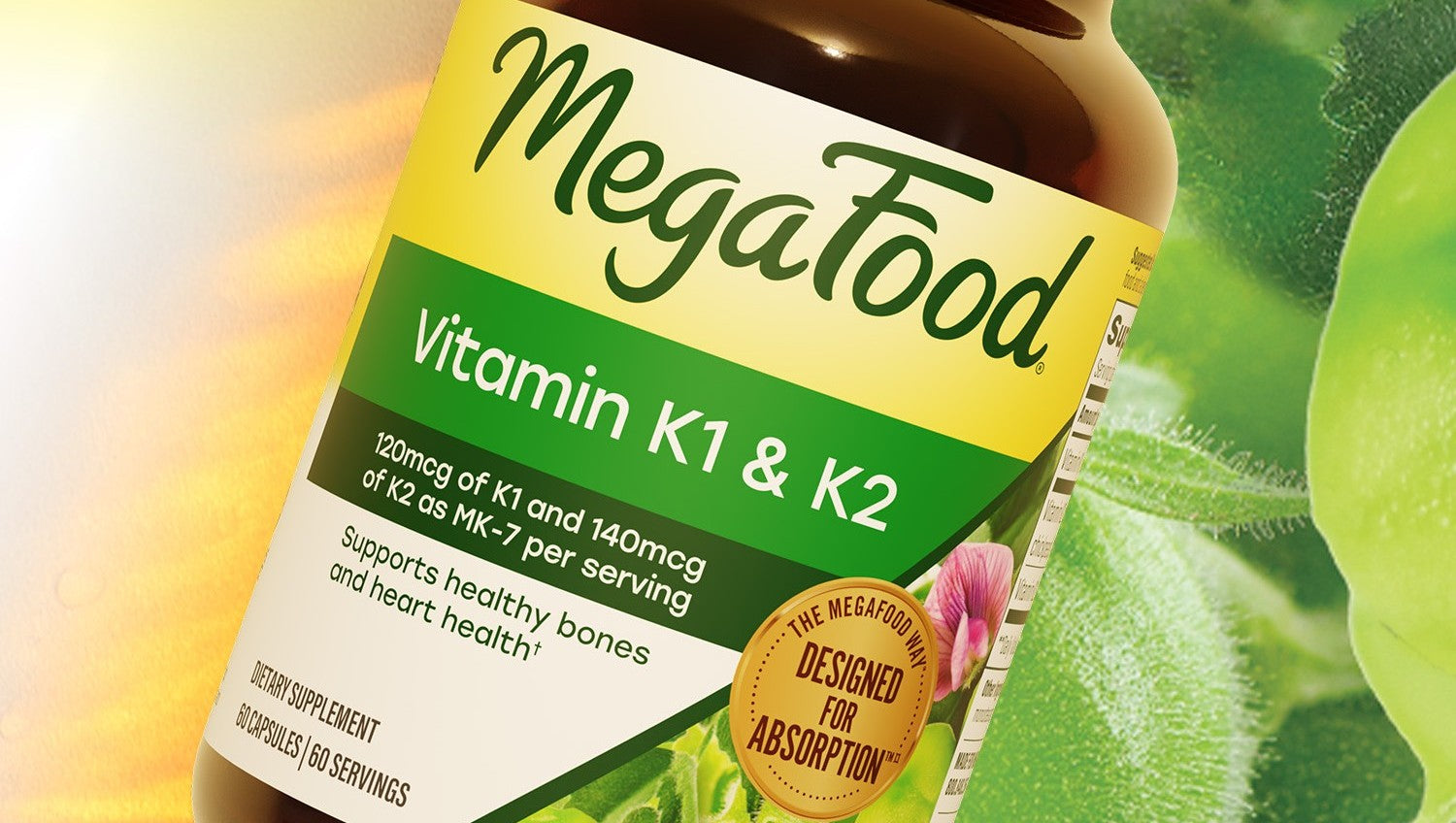
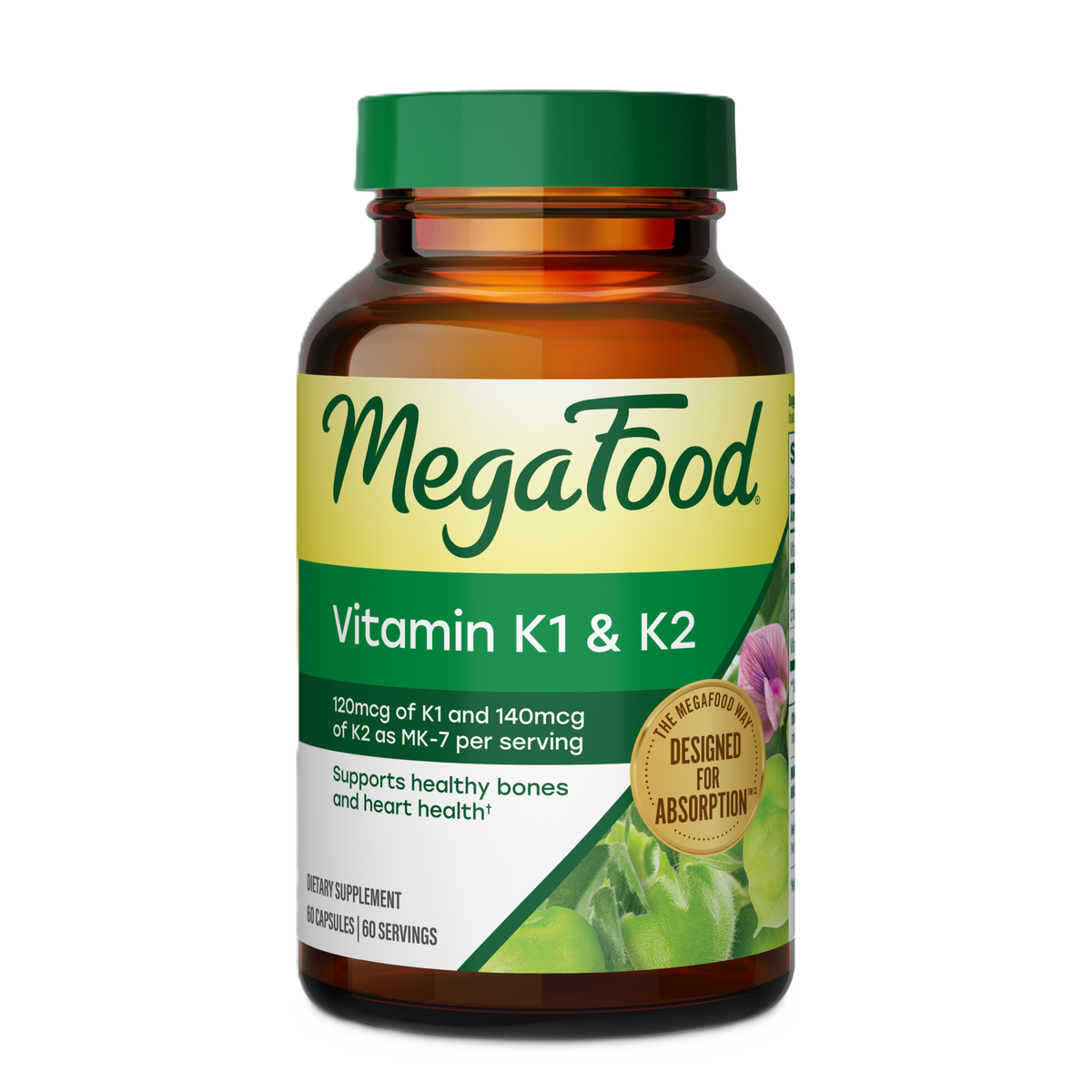
Because vitamin K1 and vitamin K2 support different aspects of health, some supplements provide both forms.
Combining vitamin K1 and vitamin K2 can help provide more comprehensive vitamin K support in a single serving. While vitamin K1 is most closely associated with healthy blood clotting, vitamin K2 is often chosen for its role in supporting healthy bones and cardiovascular health.†
Together, they offer complementary support for important functions throughout the body.
Should You Consider a Vitamin K Supplement?
Many people can obtain vitamin K through a balanced diet that includes leafy greens and other nutrient-rich foods. However, dietary patterns vary, and some people choose supplements to help support their intake.
Products that provide both vitamin K1 and vitamin K2 can be a convenient way to support daily vitamin K intake while delivering the unique benefits of each form. As with any supplement, talk with your healthcare practitioner before starting a new routine, especially if you take medications that affect blood clotting.
The Bottom Line
Vitamin K is an essential nutrient that supports overall health, but not all forms of vitamin K are exactly the same.
Vitamin K1 is best known for supporting healthy blood clotting, while vitamin K2 supports healthy bones, cardiovascular health, healthy artery function, and healthy vascular function.† Together, they provide complementary support for important functions throughout the body.
Whether through food, supplements, or both, getting enough vitamin K can be an important part of supporting long-term wellness.




Leave a comment
This site is protected by hCaptcha and the hCaptcha Privacy Policy and Terms of Service apply.